The Great Ethereum Paradox: Vitalik Doubts Impact While Wall Street Buys Etheruem ETFs
Vitalik Buterin, the founder of the world’s most active blockchain, has admitted that Ethereum hasn’t meaningfully improved the lives of ordinary people. Not yet, at least. This is a surprising confession. While it might seem like a crisis of confidence, Wall Street is showing its support with nearly $169 million in inflows into spot Ethereum ETFs.
This suggests institutional investors see something Buterin might be missing. Is this smart money buying fear or a fundamental disconnect in Ethereum’s purpose? Here’s what you need to know.
Vitalik’s Admission: Ethereum Hasn’t Improved Daily Life Yet
Vitalik Buterin’s recent comments have unsettled the developer community. He candidly admitted that despite billions in value and years of development, Ethereum’s real-world impact remains minimal for the average non-crypto user.
Buterin warned of the internet becoming a “memetic warzone” dominated by surveillance and corporate control. His vision for Ethereum is to create “sanctuary technologies”: tools that enhance privacy, freedom, and digital resilience against these global trends.
However, current Ethereum usage is largely dominated by DeFi speculation and meme coins. This creates a distinct identity crisis. On one hand, the founder advocates for high-minded decentralised tools. On the other hand, the network’s actual usage is driven by the very financial speculation he often criticises. As an investor, this raises a crucial question: Is Ethereum a revolutionary tech stack or simply a very expensive casino?
DISCOVER:
Wall Street Votes With Capital: $38M in Fresh ETH ETFs Inflows
While Vitalik worries about the soul of the network, institutional investors are busy buying the supply.
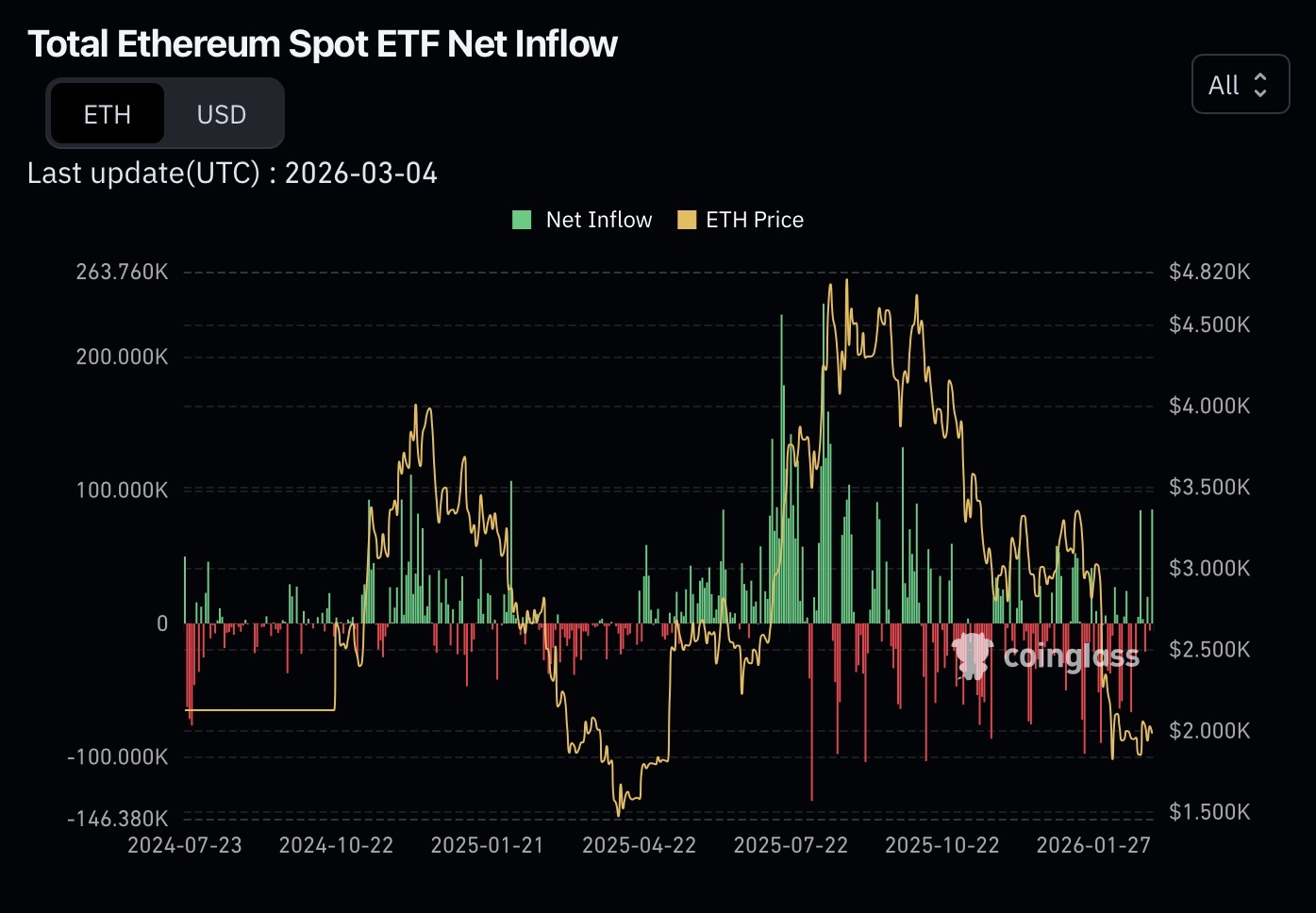
Ethereum ETF inflows have surged back into positive territory, recording approximately $38.4 million in net buys on Monday and over $180 million yesterday. This marks an interesting reversal from the recent stagnation that had retail investors gripped with fear.
Leading the charge was the BlackRock ETHA fund, which pulled in over $69 million alone, followed closely by Fidelity’s FETH. This is not retail money gambling on a meme coin. This is crypto institutional adoption playing out in real-time.
Total Ethereum Spot ETFs Net Inflow Source:
Why is this happening now?
Institutions are notorious for buying the dip when sentiment is lowest. While retail investors panic over Vitalik’s philosophical concerns or geopolitical tensions, asset managers like BlackRock are accumulating infrastructure. They aren’t buying Ethereum for “sanctuary technology”: they are buying it because it is the settlement layer of the internet economy.
This divergence creates a classic investment paradox. The founder is bearish on the impact, but the market is bullish on the asset.
DISCOVER:
Ethereum Price Analysis: Can ETH ETFs Inflows Push The Price Above Resistance?
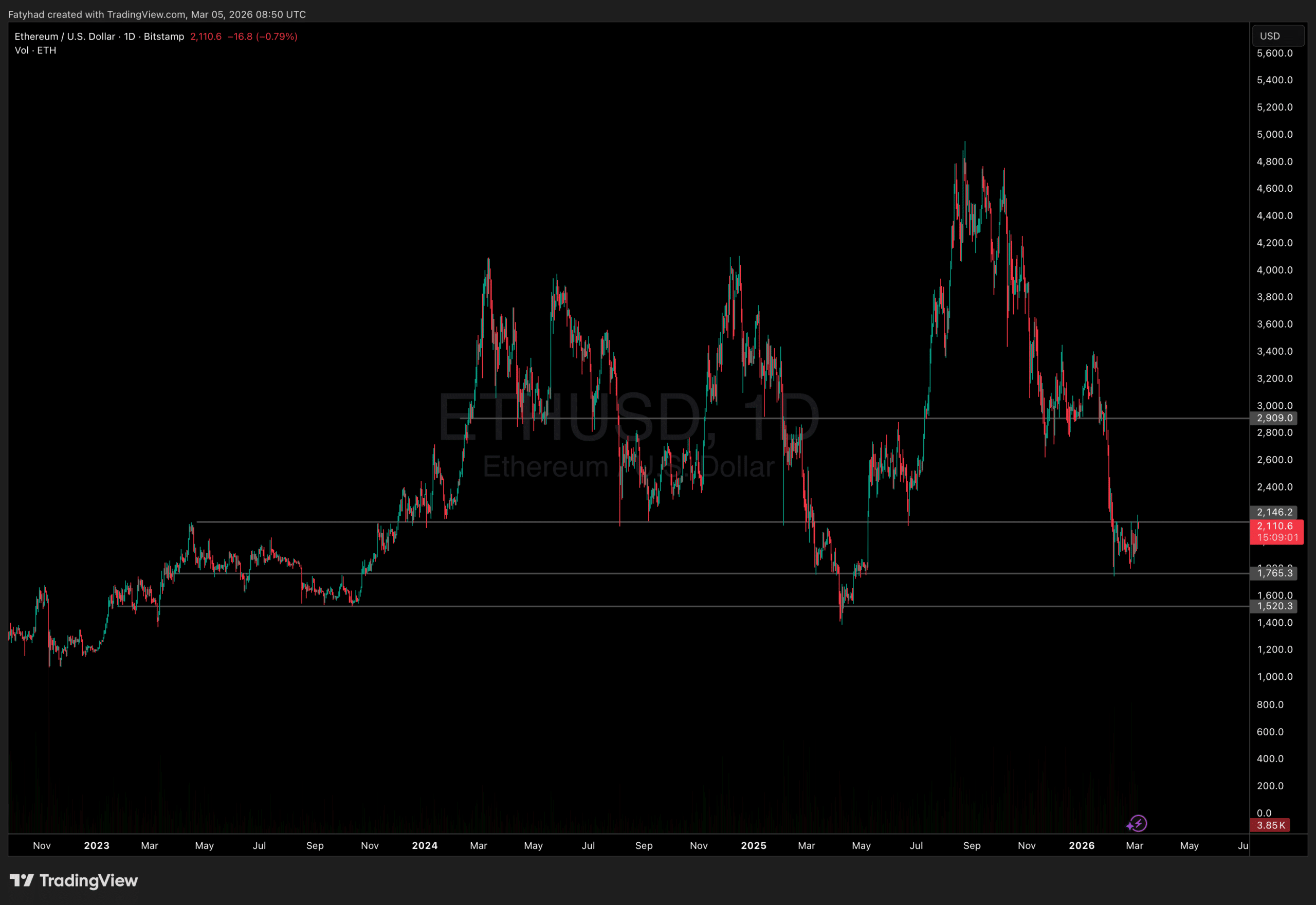
The price action tells a story of hesitation followed by accumulation. After a brutal correction that saw Ethereum test the lower bounds of its 2024 range, the asset is trying to find a footing.
Ethereum Price Analysis Source:
Currently, ETH is trying to break the $2150 resistance level. If the Ethereum ETF inflows continue at this pace, we could see a supply squeeze that forces the price back toward the resistance and possibly target $2500 next. On-chain data supports this view, showing that whales are accumulating rather than distributing.
However, the risk remains. If Vitalik’s concerns about lack of utility translate into user apathy, the $2,000 level remains the next major support to watch.
DISCOVER:
Key Takeaways
Vitalik Buterin admits Ethereum lacks real-world impact for average people, yet Ethereum ETF inflows just hit $169M in a single day.
Giants like BlackRock ETHA are buying the dip, ignoring the philosophical doubts in favor of long-term asset accumulation.
To reach $2500, Ethereum needs to overcome the resistance level at $2150.
Follow 99Bitcoins on For the Latest Market Updates and Subscribe on For Daily Expert Market Analysis.