Iran War and Oil Price Surge: Bitcoin Is Falling, But Is Crypto Safe?
The escalation of the Iran war, following U.S. and Israeli strikes, has effectively choked off the Strait of Hormuz, the world’s most important oil pipe. And you can guess it: oil prices are already skyrocketing. The consequences of the Iran war will be far-reaching, affecting everything from petrol prices to crypto.
When the oil price surges, logging its biggest jump in four years, it creates a domino effect. Higher oil prices mean it costs more to transport goods, heat homes, and run factories. This leads to inflation (rising prices for everything else). And here is the problem for crypto: when inflation heats up, the Federal Reserve (the U.S. bank that controls money supply) is less likely to cut interest rates.
One of the largest refineries in the world, owned by Saudi Aramco, suspended operations after a drone strike and ensuing fire. – Bloomberg
— MenchOsint (@MenchOsint)
DISCOVER:
The Iran War Is Affecting Crypto: The Bitcoin’s ‘Risk-On’ Problem
You might be asking, “Wait, isn’t Bitcoin supposed to be digital gold? Shouldn’t it go up during a crisis?”
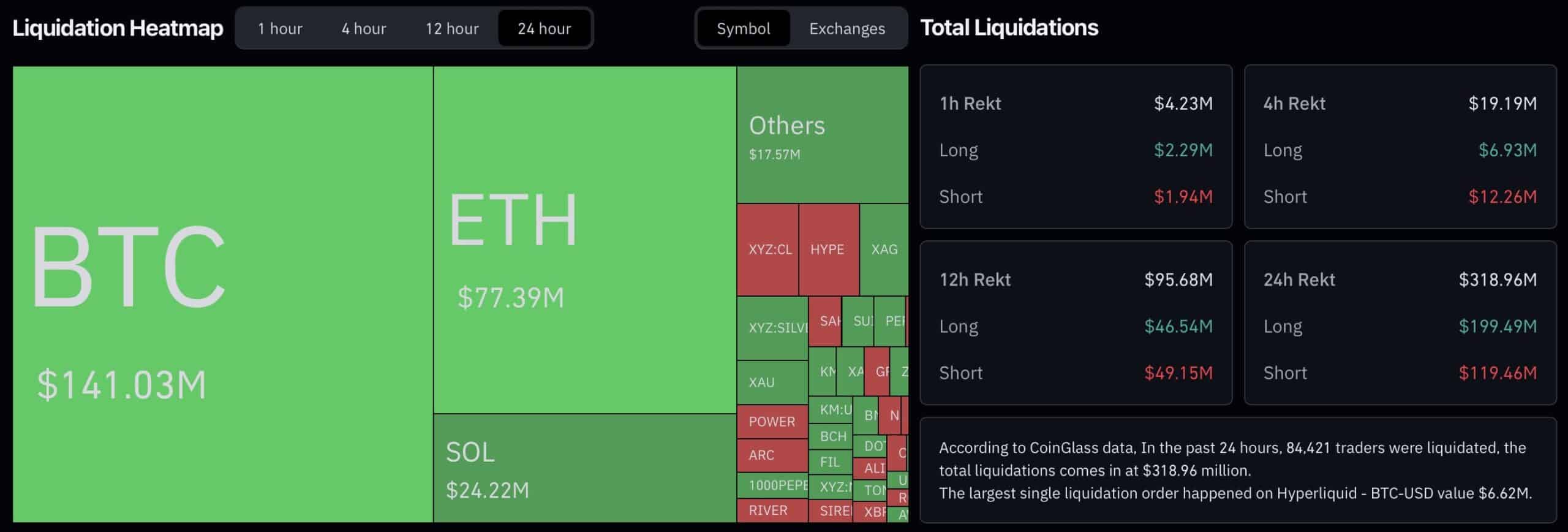
It is a fair question. Traditionally, gold is a “safe haven”. Gold prices have indeed surged near $5,400 amid the chaos. However, Bitcoin is currently behaving like a “risk-on” asset, similar to tech stocks. When fear grips the market, investors dump anything they perceive as volatile. This is why we are seeing massive crypto liquidations lately, especially during weekends when the liquidity is thin.
Liquidation Data Source:
This massive flush of “long” positions forces the price down even further, creating a cascade of selling. Institutional investors, who have been driving much of the recent price action, are stepping back to assess the damage. , suggesting that big players prefer to sit on their hands rather than catch a falling knife during geopolitical uncertainty.
DISCOVER:
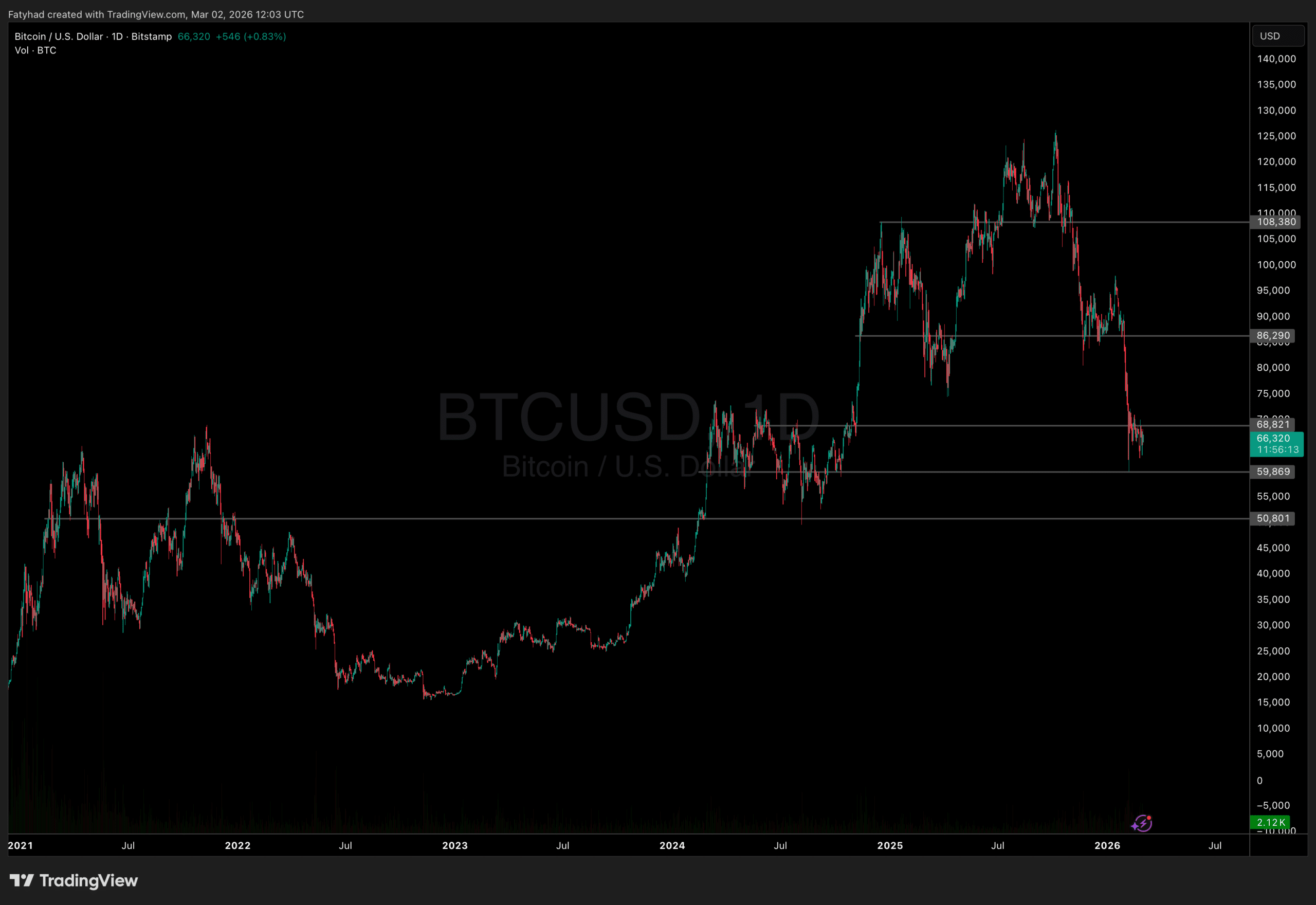
Bitcoin Price: The $60,000 As A Significant Support Level
Bitcoin Price Action Source:
The Iran war is spooking crypto markets. So, where does the bleeding stop? Right now, Bitcoin is hovering in the mid-$66,000s, but the charts suggest we are in a precarious spot. The immediate area to monitor is around $63,000. A break here would push BTC USD dangerously close to $60,000. Breaking that barrier could lead to further declines into the $50,000-$52,000 range.
. A drop below this could trigger a deeper sell-off as panic sets in. However, it is worth noting that previous dips during geopolitical conflicts (like the Russia-Ukraine onset) were often bought up quickly once the initial shock wore off.
The market hates uncertainty more than bad news; once the scope of the Iran war impact is clearer, stability often returns.
Follow 99Bitcoins on For the Latest Market Updates and Subscribe on For Daily Expert Market Analysis.
Key Takeaways
Bitcoin dropped to the $66,000 range following escalations in the Iran War and a 13% spike in oil prices caused by Strait of Hormuz tensions.
Unlike gold, Bitcoin is currently acting as a “risk-on” asset, suffering from over $350 million in liquidations as inflation fears rise.
Investors should watch the $60,000 psychological support level and avoid high-leverage trading while volatility remains high.


 One of the largest refineries in the world, owned by Saudi Aramco, suspended operations after a drone strike and ensuing fire. – Bloomberg